02 — projects
Every project in one grid. Looking for one kind of work? Browse by domain instead.
The index that beats the libraries
Everyone imports a vector search library. I wrote my own in C++ and made it win. It answers nearest neighbor queries 1.8 times faster than hnswlib and 2.5 times faster than FAISS, at 0.999 recall, on a single thread.
The LLM gateway that remembers
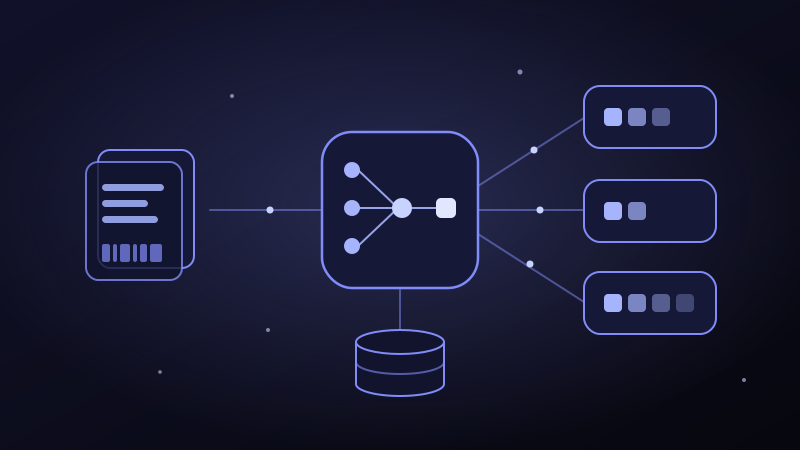
A gateway that remembers what your model already said. It matches prompts by meaning, not exact text, so 78 percent of requests skip the model entirely and the typical answer comes back in 44 milliseconds. The memory runs on Proxima.
A policy gateway between AI agents and their tools
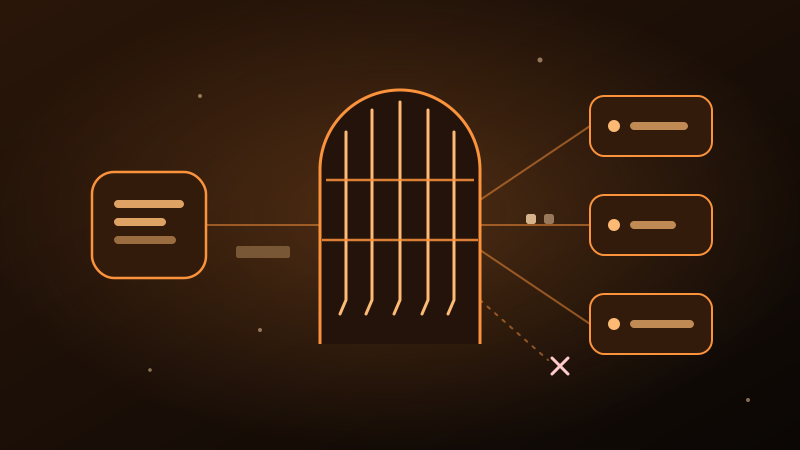
A Rust gateway for the Model Context Protocol. It sits between an agent and its MCP servers, refuses any tool call its policy did not permit, reads tool output before the model does to redact credentials and fence off injected instructions, and writes an audit record for every decision. Default deny, 224 tests, CI on Linux, Windows and macOS.
A storage engine that never loses an acknowledged write
A multithreaded block storage engine in C++17 for Linux: block reads and writes, atomic batches, snapshots and CRC-32C checksums, with crash recovery from a write-ahead log and double-buffered checkpoints. Validated by 35 fault-injection scenarios that crash it at every file-system call, flip every byte of its metadata, and kill it mid-write with SIGKILL.
Media over QUIC, WebRTC and HLS on the same bad network
A single-command testbed that runs three live media delivery models side by side under controlled network impairment: a five-region Media over QUIC relay tree, a WebRTC SFU and HLS. MoQ reached first media fastest in seven of eight network profiles, and a controlled A/B showed that pinning the publisher's bitrate cut stalls by 72 to 83 percent with goodput unchanged.
The TA that never sleeps
The grading platform I designed after 400+ Java and Python submissions landed on my desk as a TA. Six specialized agents grade in parallel under Temporal orchestration, a confidence gate routes only the shaky grades to a human, and it runs local-first, so student work never leaves the machine.
A parallel compiler that shrinks circuits
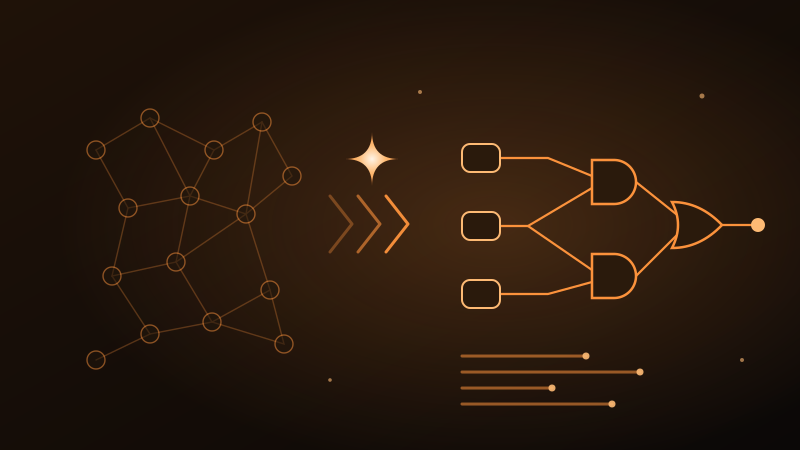
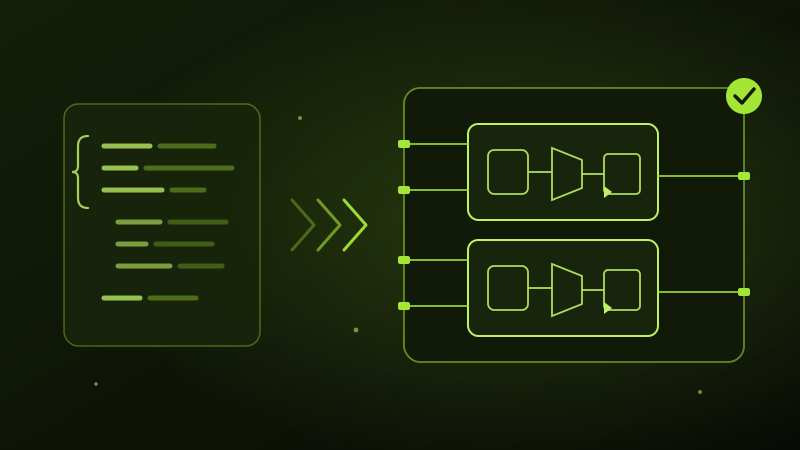
A C++ compiler that turns SystemVerilog into a smaller gate netlist and proves it still computes the same thing. Six optimization passes cut an 836K-gate benchmark by 80 percent, and optimizing independent logic regions on a work-stealing pool runs 3.0 to 3.5 times faster on 16 threads, with identical output at any thread count.
Catching driving regressions before a build ships
A validation platform for autonomous-driving software builds. It replays the same seeded scenarios through a known-good build and a release candidate, compares what the two did, classifies every regression, and turns each cluster of failures into a report an engineer can reproduce with one command. One 100,000-drive campaign runs end to end in 52 seconds.
A build farm that never compiles the same thing twice
A distributed build engine for C and C++. A gRPC coordinator schedules the build graph out of PostgreSQL, workers pull tasks and survive crashes, and every result is cached by content hash. Over a scripted 20-step edit workload it ran the compiler 84 percent fewer times than make, and never recompiled code it had already built.
Synthesizable Verilog from a structured description
A C++ generator that turns JSON design descriptions into synthesizable Verilog: module hierarchy, ports, connectivity, inserted pipeline and adapter logic. Graph checks run before anything is written. 1,200 generated configurations all synthesize in Yosys, and on 1,000 deliberately broken descriptions invalid output drops from 766 files to none.
Clock, reset and CDC checks with targeted testbenches
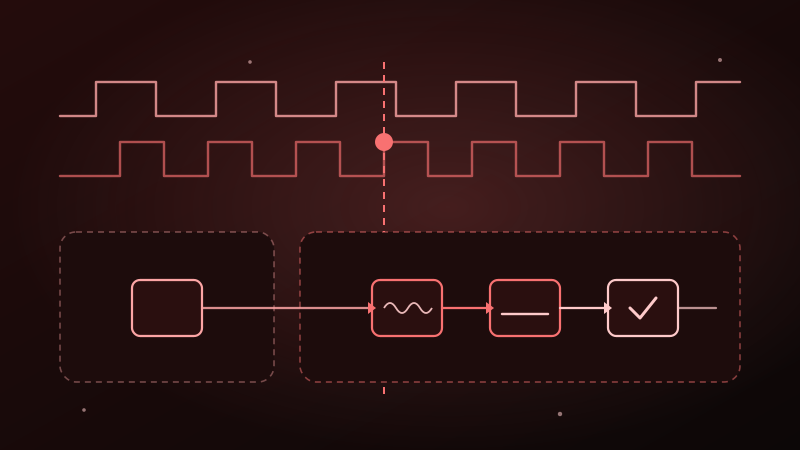
A static checker for clock domains, reset trees, synchronizers, clock gating and cross-domain paths in Verilog, with 16 rules and a fix for each finding. For every violation it writes and runs a targeted testbench and draws the waveform at the first hazard. It found all 570 bugs injected into 870 generated designs with no false alarms, and the tests reproduced 89 percent of them.
Malware Mugshots
My thesis. I turned malware files into pictures and taught three vision models to recognize the family on sight. They vote together and agree 94 percent of the time across 17 families. It became a first-author paper, now on arXiv.
Describe a vibe, get movies
A two-stage hybrid movie recommender, built the way production systems are. A two-tower neural model retrieves candidates through Proxima, my own C++ vector search engine; a neural ranker reorders them. It answers free-text requests like 'a slow-burn sci-fi like Arrival but funnier' and includes movies in theaters this week.
Watch the search walk
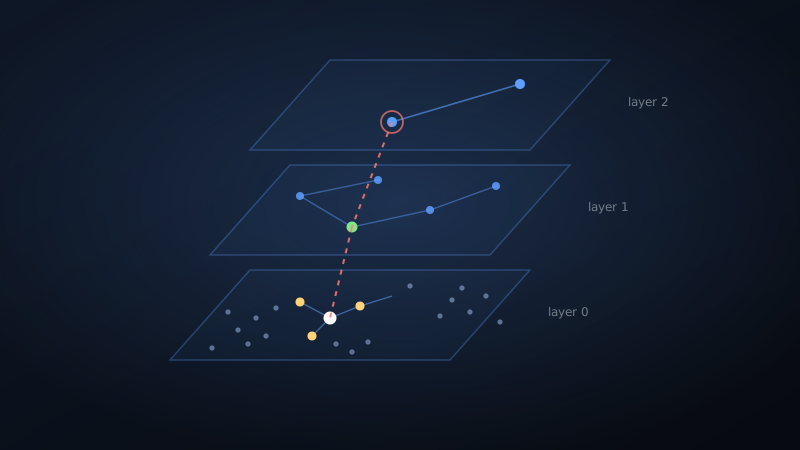
Vector search does not scan your data, it walks a graph. This runs the real HNSW algorithm on points you can see and replays the walk hop by hop, so you can watch a query fall through the layer stack and land on its neighbors. Click to move the query, drag the sliders, break it on purpose.
Let the model learn a task once, then replay it without one
Computer-use automation for back-office web apps that have no API. A model works out how to finish a task in a legacy app once, and the run is recorded as a typed capability that replays deterministically with no model in the loop, tells a business outcome apart from a broken app, and hands the live browser to a person when it meets something it does not know.
Live mini games for two people far apart
A real-time multiplayer PWA I built for my long-distance girlfriend and me. Surprise games drop onto both phones at random times when we're both awake, we play live for a minute, and a separate AI agent writes a new game every day. One Durable Object per room, Web Push written from scratch, and it runs for $0 on Cloudflare's free plan.
Six Degrees
A social platform that thinks in relationships. It keeps 50 thousand connections in a graph database and answers who knows who in two hops, with profiles and content living in their own store alongside.
Cited, Not Guessed
A study assistant that refuses to make things up. Every answer is pulled from real source material and arrives with citations, and it stays quiet when it genuinely does not know.
What makes a song a hit
A million messy music records that shared no common keys. I joined them with C++ MapReduce on a Hadoop cluster, then asked the clean data what actually makes a song popular.
Telling a fall from sitting down
Fall detection and activity recognition from raw smartphone accelerometer and gyroscope data, comparing classical models, deep networks on raw windows and transfer learning from spectrograms. A 1D CNN detected falls with 99.35 percent accuracy, and held 98.1 percent when every test subject was unseen.
Show of Hands
Contactless identity from the palm of your hand. Four models study every scan and vote on the verdict, and together they reach 99.75 percent AUC.
Who you are, from how you walk
Identifying and verifying people from the way they walk, using a phone's accelerometer and gyroscope. A feature-based network identified walkers with 90 percent accuracy and verified them at a 3 percent equal error rate; an LSTM on the raw signal verified at 2 percent.
Zero to shipped in a week
An AI patient assistant that talks back, in text and in voice. I took it from an empty folder to a shipped product in under a week, working entirely AI native.
TCP, from Scratch
I rebuilt TCP by hand over raw sockets. The handshake, the sliding window, the retransmissions when packets vanish, all of it, with a live dashboard watching every packet move.